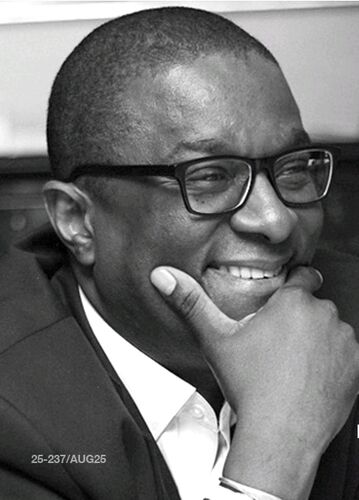
By Kofi Amegashie (St. Mary's University, Twickenham)
The dominant narrative in global politics today is one of collapse. We are told that the rules-based international order has failed, that multilateralism is finished, and that the world has reverted to raw power politics. This diagnosis is persuasive - but wrong. What we are witnessing is not collapse, but drift: institutions persist, rules remain formally intact, yet the assumptions that once gave them meaning and legitimacy no longer command shared belief.
This distinction matters for development. Collapse suggests replacement. Drift signals misalignment. In a drifting system, structures endure while their ontological and epistemological foundations fragment. Development institutions continue to operate, but their authority travels less easily across contexts, particularly in the Global South.
Recent speeches by Canada’s Prime Minister, Mark Carney, and France’s President, Emmanuel Macron, delivered at Davos in early January 2026, make this condition unusually visible. Though rhetorically different, both leaders are responding to the same reality: a global order whose rules still exist but no longer organise practice in the way they once did.
Drift, not breakdown
The post-1945 liberal order rested on two core assumptions. Ontologically, the world was understood as a system of sovereign, rational states interacting through law rather than hierarchy or civilisational difference. Epistemologically, legitimacy flowed from technocratic expertise, procedural neutrality, and claims to universal applicability. Institutions such as the UN, the WTO, and the Bretton Woods bodies derived authority not from power alone, but from belief in their impartiality.
That framework proved durable, but durability is not permanence. As political, economic, and cultural realities diversified, the gap between institutional form and lived practice widened. Procedures continued; outcomes diverged. Expertise remained, but its authority eroded. The system did not disappear - it drifted.
This explains why global governance now feels simultaneously familiar and unstable. We still inhabit the same architecture, yet increasingly disagree about what counts as legitimate knowledge, responsible leadership, and fair development practice.
Carney: naming epistemological drift
Mark Carney’s Davos address is striking because it names this condition directly. He describes the rules-based order as a “pleasant fiction” and urges countries to stop “living within the lie.” Drawing on Václav Havel, Carney argues that systems persist not only through coercion, but through ritualised compliance with norms that participants privately know no longer reflect reality.
This is epistemological drift in plain language. Institutions endure because actors continue to perform belief in them, not because that belief is genuinely shared. The system’s power lies in the performance; its fragility lies in the same place.
Carney reinforces this diagnosis by reframing sovereignty in material terms. Strategic autonomy, he argues, now depends on energy security, supply chains, finance, and industrial capacity. When rules no longer protect you, you must protect yourself. Legitimacy follows resilience and delivery, not procedure alone.
Crucially, Carney does not call for abandoning multilateralism. Instead, he advocates “variable geometry”: flexible coalitions, issue-by-issue cooperation, and shared resilience among middle powers. Institutions persist, but their meaning shifts. This is drift, not replacement.
Carney does describe the moment as a “rupture.” Yet this need not contradict a drift diagnosis. What policymakers experience as rupture is often the moment long-term drift becomes undeniable. The break is experiential, not structural.
Macron: managing drift without naming it
Emmanuel Macron’s speech offers a revealing contrast. He acknowledges instability, power politics, and weakened multilateralism, yet frames the solution as restoration rather than re-foundation. His answer is more effective multilateralism, greater European sovereignty, and renewed commitment to the rule of law.
Yet Macron’s policy prescriptions quietly tell a different story. European preference, anti-coercion mechanisms, supply-chain derisking, strategic autonomy - these are not the tools of a system confident in universal rules. They are adaptations to a world in which neutrality no longer guarantees protection and procedure no longer guarantees legitimacy.
In practice, Macron proposes governing as if drift is real, even while rhetorically resisting that conclusion. His speech exemplifies the position of system stewards: leaders who sense ontological mismatch but attempt to manage it within an epistemology that no longer fully fits. The danger here is not denial of instability, but misdiagnosis of its source.
China, India, and misplaced blame
Seen through this lens, China and India appear less as disruptors of order than as early responders to drift.
China reorders global reality materially rather than procedurally. Infrastructure, logistics, and connectivity take precedence over institutional consensus. Legitimacy is validated through performance and delivery. Institutions remain, but their assumptions no longer organise practice.
India responds differently. It frames the world as a family of plural civilisations rather than a single integrated system. Difference is constitutive, not deviant. Legitimacy flows from moral responsibility and contextual judgment rather than universal procedure.
What unites these responses is not a shared alternative model, but a shared recognition that liberal universalism no longer travels easily across development contexts. The drift did not begin with them. They simply stopped pretending otherwise sooner.
From universalism to plural futures
Carney and Macron, in different ways, confirm this diagnosis. One names drift openly. The other suggests governing around it. Together, they reveal a system that persists institutionally but fragments epistemically.
For development studies, the implication is clear. The challenge is not to restore a singular global order, but to design institutions capable of accommodating plural ways of knowing, governing, and developing. Understanding drift - rather than denying it - is the first step toward re-imagining global governance in a genuinely multipolar world.
Kofi Amegashie is Senior Lecturer and Course Lead in Business Management at St Mary’s University, Twickenham. His research explores ontological and epistemological drift in global governance, executive education, and development institutions, with particular attention to how legitimacy, knowledge, and authority are contested in a multipolar world. A former international business executive, he brings a practitioner–scholar perspective to debates on development, multilateralism, and global order. He presented related work at the DSA Ireland Annual Conference and continues to develop this research across academic and public-facing platforms.
(The views expressed are those of the author and do not necessarily reflect the views of St. Mary’s University, Twickenham)